Little Bat is excited about his first night in school! Readers will love to see him spread his wings in this sweet, inspiring picture book from New York Times best-selling and Caldecott Honor-winning Brian Lies. Perfect for fans of We Don't Eat Our Classmates and The King of Kindergarten.
Little Bat can't wait for his first night of school. He is excited about everything: his new school supplies, learning amazing things, and making new friends.
But when he finally arrives, his world turns upside down.
Any little bat who's tried something new or gone somewhere they've never been before knows that first times can be scary. With the help of Little Bat and his adorable classmates, readers will see that spreading your wings is easy when you listen, act with kindness, and take a chance on new friends.
With his signature, gorgeous artwork, New York Times bestseller and Caldecott Honor winner Brian Lies brings his expressive bats back for the youngest readers.
Illustrated by Carly Allen-Fletcher. Text by Gordon McMillan. The tube-lipped nectar bat is the pollinator of a pale, bell-shaped flower found in the Ecuadorian cloud forests. First discovered in 2005, the bat is the only known pollinator of a pale, bell shaped flower called Centropogon nigricans . Due to the length of the bloom, no other animal can reach the nectar which rests at the flower's base. This is the story of one such bat and her nocturnal search for this rare flower whose nectar sustains her.
Carly Allen-Fletcher is a freelance illustrator living and working in the Midlands, UK. She studied Illustration at Loughborough University. Her work explores the combination of digital painting and traditional media, creating images by layering graphic shapes with painted textures and handmade elements. She is inspired by nature and geometric forms. In 2015 she won a silver prize (1,000 pounds) from the UK Association of Illustrators in the "London Spaces and Places" category. Carly is also the author/artist of two board books, Goodnight, Seahorse and Goodnight Forest. View her work here: http://carlydraws.com/ Gordon McMillan is an artist and writer living near Nashville, Tennessee who looks at everything from board games to textbooks as sources of inspiration. He is the author/illustrator of the children's book Scout, published in 2021.
Little Bat has never stayed up all daybefore! How does the world look when he's normally asleep? This sweet, sunny picture book from New York Timesbestselling and Caldecott Honor–winning Brian Lies is a charming story of new experiences and new friends.
Little Bat always goes to sleep at the end of the night. But what if he stayed up all day?He's excited to see how everything looks in the sun!
It turns out the world is a much different place during the day, when Little Bat is normally sleeping. It's hot, bright, and noisy. Luckily, Rusty the Squirrel is willing to show Little Bat around. But when these new, fast friends separate at the end of the day, how will they stay in touch when one is usually awake while the other is asleep?
With his signature gorgeous artwork, New York Times bestseller and Caldecott Honor winner Brian Lies brings his expressive bats back for the youngest readers.
The launch of a picture book series about the adventures of a book-loving bat and his buddies as they patrol and protect their library home. Hardcover, 32 PP.
Booker the bat has completed his training and he's excited to report for duty as the newest guard at the Joanina Library in Coimbra, Portugal. His job is to fly through the stacks at night, gobbling down the bugs that are in turn eating the 200,000 antique leather books. It's the perfect job for Booker, because he loves to read. And now he's saving books!
There's only one problem: how will he fit in with the other guards? They're so cool and confident, and what if they don't like him? But when Booker spots a human attempting to steal pages from one of the valuable books, he summons his courage, (echo)locates the other bat guards, and swoops in with a plan to save the day!
Challenging children to use their creativity and imagination, the twenty-eight activities in this book teach children dozens of fun facts about bats, while increasing kids' communication, math, writing, and artistic skills. The book is suitable for ages five through ten.
This creative thinking book promotes awareness and concern for these gentle and beneficial creatures. It is designed to help children think about bats and the issues facing them. By taking the time to foster this understanding in our young conservationists today, we will be saving a place for wildlife tomorrow.
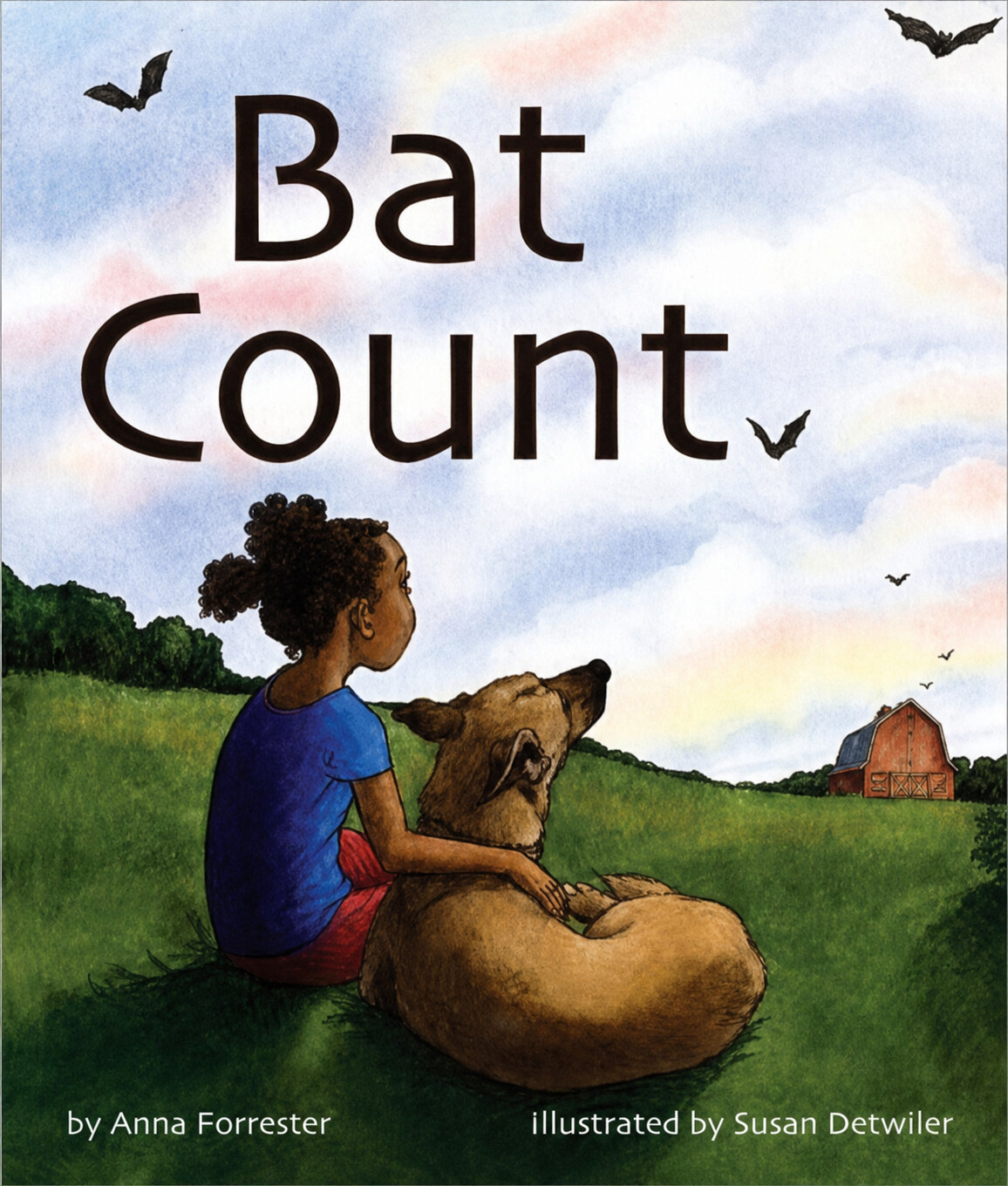
Jojo is prepping for an exciting night; it's time for the bat count! Bats have always been a welcome presence during the summers in the family barn. But over the years, the numbers have dwindled as many bats in the area caught white-nose syndrome. Jojo and her family count the bats and send the numbers to scientists who study bats, to see if the bat population can recover. On a summer evening, the family quietly makes their way to the lawn to watch the sky and count the visitors to their farm.
This work of narrative nonfiction includes a 4-page For Creative Minds section in the back of the book and a 30-page cross-curricular Teaching Activity Guide online. Bat Count is vetted by experts and designed to encourage parental engagement. Its extensive back matter helps teachers with time-saving lesson ideas, provides extensions for science, math, and social studies units, and uses inquiry-based learning to help build critical thinking skills in young readers.
Katie Gillies, Director of the Imperiled Species Program at Bat Conservation International (www.batcon.org), and Catherine J. Hibbard, White-nose Syndrome Communications Leader with the U.S. Fish and Wildlife Service, contributed by verifying the accuracy of the information in this book. 32pp, pb, early reader.
First published in 1964, this modern edition of a classic tittle still enthralls both adults and children. Full of wonderful illustrations by Maurice Sendak. The Bat-Poet" is a haunting little story, a parable of charming instruction -- and of instructive charm. It is truly about a bat and at the same time truly about a poet. The animal is real as an animal and the human activity is also real. This union is often asserted or hoped for in current children's books, but not usually achieved. The poetry is not brought in by the back door in a mood of earnest pedagogy. These lovely verses are the kind a reflective, gentle bat would write if he were the poet Randall Jarrell.
At the beginning the little bat is sleeping snugly on the porch with all his fellow creatures. But they move to the barn at the end of the summer and he suddenly does not see why he should go to the barn when he really wants to stay on the porch. He remains on the porch (alienation!) even though he sorely misses the others. And he also begins to feel the free curiosity and adventure of the creative spirit: the little bat stays awake in the daytime and looks about him. He ponders the coarse song of the mockingbird and wonders if he could sing too. He finds that he cannot do very well with the song, but feels drawn toward the creation of the words for songs. The first efforts of the bat-poet are judged adversely by the standard of bare reality, but he continues..
The few poems have a gravity and a melancholy sweetness. The mockingbird is an accomplished technician, able to instruct the bat in his craft. "The next-to-the-last line's iambic pentameter, and the last line's iambic trimeter," he explains at one point. In the most natural way certain critical concepts about poetry and also about the nature of the poet are brought into this little tale. The chipmunk says about poetry that "when it has all the things you do, you can't help liking it." At the end the bat-poet returns to his fellow bats, to sleep snugly with them again. Since it is the purpose of his poetry to tell them about themselves he cannot be separated from them forever or he would become unreal and shallow.
Mr. Jarrell's book is wise and childlike. The child who understands its lessons will be wise and they are easy to understand because they are found in life. The Sendak illustrations are beautiful, dark, wonderfully still and magical, in an old-fashioned way..
A beautiful box of New York Times best-selling Bats books. Includes three captivating stories about the nighttime exploits of a crew of nocturnal adventurers--Bats at the Beach, Bats at the Library, and Bats at the Ballgame. With gorgeous illustrations to pore over and lyrical, rhyming text to read aloud, these books are made for repeat performances. 6 1/2 by 8 1/2 inch hard bound books. Includes a sheet of stickers.
The bats are back, and they're ready to make music! A late-spring night sky fills with bats flocking to a theater already echoing and booming with delightful sounds of music. Bat music. Plunky banjos, bat-a-tat drums, improvised instruments, country ballads, and the sweet cries of a bat with the blues. Join this one-of-a-kind music festival as the bats celebrate the rhythm of the night, and the positive power of music. Written and illustrated by Brian Lies. Other books in the series include Bats At The Beach, Bats At The Library and Bats At The Ballgame. All titles available here on Batgoods.com.
Lies, who has ushered bats through a night at the library, the beach and the ballpark, invites a colony into a playhouse after lights out. There, he carves out a piece of the small hours for his readers, that strange time of collywobbles and spooky quiet. The playhouse is anything but, as the bats have decided to light up the dark with "a little night music." In tuneful couplets laced with fluid if demanding words like "sitar" and "improvise," the bats get busy with jazz--is that Dizzy, with those cheeks?--and rock--is that Leon Russell, in Uncle Sam's hat?--and a camellia-adorned bat woman with a broken heart: "Her feelings fill the room with blue," a room that Lies has draped with indigo. The paintings are full of mood and spot-lit color, the bats upside down and right-side up, the rhyme both casual and emotive. There is no doubt that Lies has made an effort to please adult readers with plenty of allusions: In what passes as their dusk, a bat takes his fiddle to the roof. But the bats never fly over young readers' heads. They are there to entertain, and that they do!
Join the free-for-all fun at the public library with these book-loving bats! Shape shadows on walls, frolic in the water fountain, and roam the book-filled halls until it's time for everyone, young and old, to settle down into the enchantment of story time. Brian Lies' joyful critters and -their nocturnal celebration cast library visits in a new light. Even the youngest of readers will want to join the batty book-fest! Also read "Bats at the Beach" by Brian Lies. HB, 32pp., 2008.
The best batty bedtime story in years. Bats of many species pack up their picnic baskets for a little beach time fun. Don't forget the moon-tan lotion! Great illustrations and delightful verse. A read aloud or very early reader. Written and illustrated by Brian Lies, 2006, 30pp, hb.
The third in a great series of kids books. The bat vendors sell Mothdogs. They sing "Hang me up in the rafters, Hang me up by the toes, buy me some beenuts and Cricket Jack". By Brian Leis. Age 3 up, 2010, 32pp, hb. Plush "Bats at..." toy also available.
Red bats can hibernate or migrate to warmer regions during the winter. Should this solitary little bat stay or should she go? That's the question the little red bat ponders as the leaves fall and the nights get colder! Some animals, such as the squirrel, tell her to stay. But what about the dangerous creatures that hunt red bats in winter? The sparrow and others urge her to go. But where? Carole Gerber takes young readers on an educational journey through one bat's seasonal dilemma in Little Red Bat. Imaginative illustrations by Christina Wald give little red bat charm and personality, and children will be waiting and wondering what will happen next. Will the little red bat stay put or migrate south for safety and warmth? Facts and general bat information at the end of the story. Ages 4-8, 32pp, paper back.
Little Bat swoops and spins through the night sky, gathering treats before returning home again in this adorable addition to the Finger Puppet library. This fun and interactive reading experience is a great way for parents to enjoy with their children.
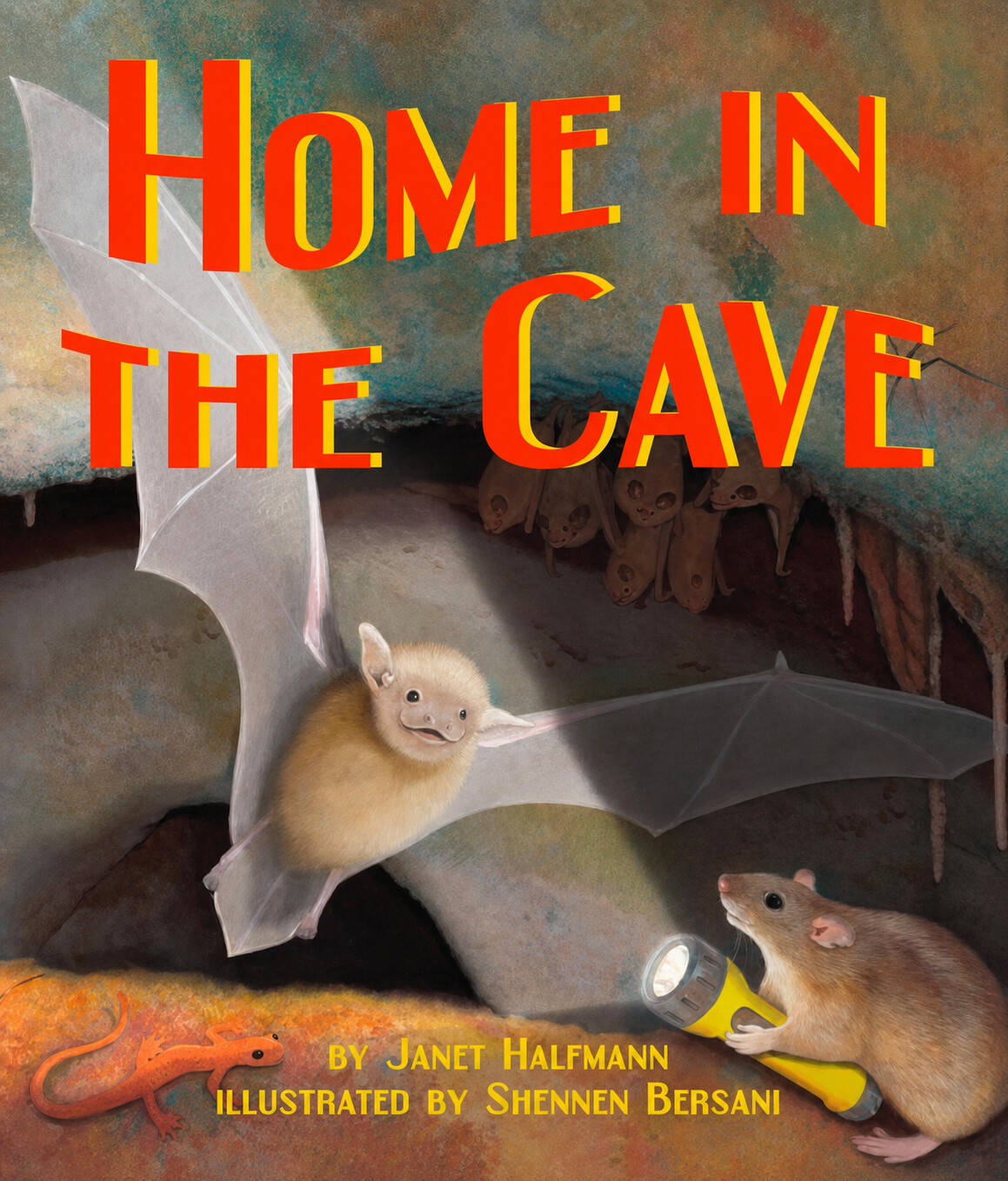
Baby Bat loves his cave home and never wants to leave it. While practicing flapping his wings one night, he falls, and Pluribus Packrat rescues him. They then explore the deepest, darkest corners of the cave where they meet amazing animals--animals that don't need eyes to see or colors to hide from enemies. Baby Bat learns how important bats are to the cave habitat and how other cave-living critters rely on them for their food. Will Baby Bat finally venture out of the cave to help the other animals? Written by Janet Halfmann Illustrated by Shennen Bersani 32 pg, 10 x 8.5, ages 4-9
Here is a stunningly illustrated nonfiction picture book for young readers ages 6-9 about a year in the life of a little brown bat named Otis.
This gorgeous and lyrical picture book continues the Secret Life series by renowned science author Laurence Pringle and illustrator Kate Garchinsky. It follows a year in the life of a little brown bat named Otis as he learns to be a hunter, escape predators, and find a mate. Stunning, realistic illustrations celebrate the beauty of these mysterious creatures as readers learn important facts through an engaging and fascinating story. The book also includes back matter with more in-depth information, a glossary, and further resources. Hb.
My name is Bumblebee Bat. I may be small, but I’m a great flyer. I live in a secret cave with my brothers and sisters.
Want to know more? Then open this Geisel Honor book and fly with Bumblebee Bat into the night.
A series of questions and answers introduce children to the life and habitat of the exotic and endangered Bumblebee Bat. One inch long and the weight of a dime, these tiniest of bats are carefully protected; expert author Darrin Lunde takes us to their home in Thailand and provides a sneak peek into their world. Scientifically accurate illustrations make these exotic animals accessible to young readers.
Back matter includes additional child-friendly facts.
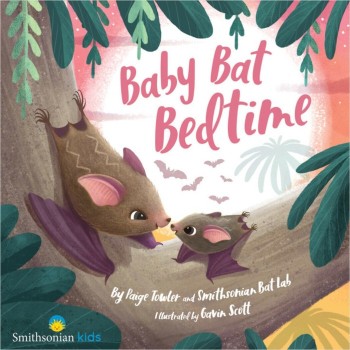
At the end of a warm, dark night in the rainforest, dawn starts to break. Soon, animals will rise to greet the day. But not everyone is waking up. Some animals haven’t even been to bed yet! Small brown bats have been busy all night, swooping and looping through the starry skies. Now it is time for them to settle in among the trees. But one baby bat wants to stay up and play. How will her mother convince her it’s time to close her eyes and go to sleep?
Lyrical text and soft, soothing illustrations show little readers that from bath time to lullabies, getting ready for bed looks very similar for bat babies and human babies alike.
Fascinating scientific facts and photos from the Smithsonian Bat Lab showcase the amazing lives of bats and reveal how they are not so different from humans in their family behavior. 2024 hb, 10 x 10 inches. 32 pages. Grade 1 reading level.
Shop Bat Books For Kids And Young Readers
Compare reading level and format to find titles for independent readers, read-aloud time, classrooms or gifts.