Now availabe for preorder. Shipping October 1st. You may also order autographed copies to be shipped on Oct 21 after the upcoming North American Symposium on Bat Research to be held in Fort Collins, Colorado where the author will be signing books during lunch on Thursday.
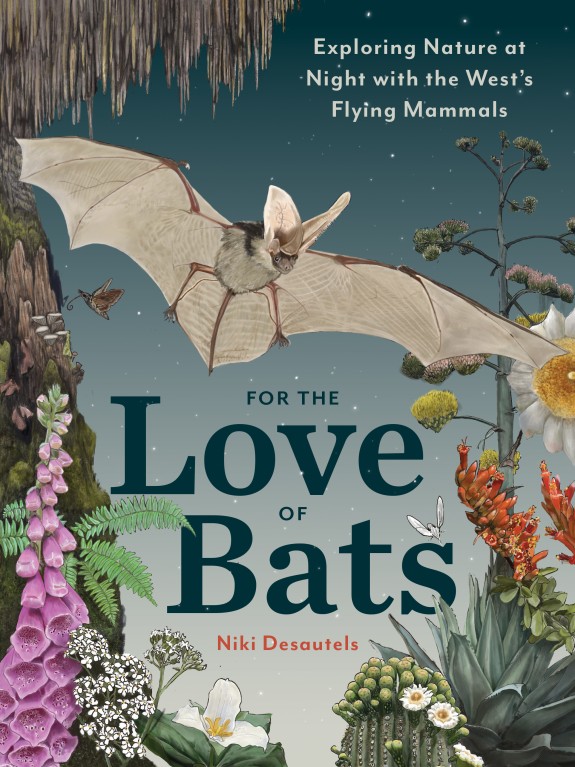
Bat advocate Niki Desautels celebrates the astonishing diversity of bats, revealing their unique behaviors, habitats, and physiology while making a compelling case for stewardship and conservation. In For the Love of Bats she shares a vivid, place-based exploration of the West’s only flying mammals, blending natural history with in-the-field experiences. By by Niki Desautels. Illustrated by Anneke Wilder. 280 pages, 2026, Soft bound.
Each chapter delves into fascinating details--from echolocation and hibernation to feeding habits and migration--while connecting these traits to broader ecological patterns. Also included are an additional brief guide to all 32 species commonly found west of the Rockies, resources for learning more, tips for observing bats, guidance on creating backyard habitats with bat houses, and recommendations for top destinations on public lands to witness bat activity.
Despite their importance, nearly 200 bat species are endangered globally. With compelling narratives, fascinating science, and actionable conservation advice, For the Love of Bats invites readers to embrace the wonder of these extraordinary mammals--reminding us that bats are not just survivors of the night, but vital architects of healthier, more resilient ecosystems.
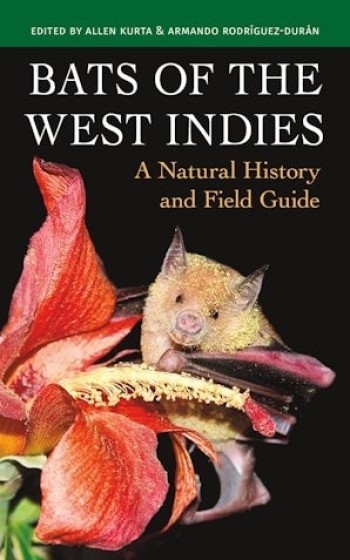
Bats of the West Indies is a concise guide to the sixty-one bat species found across the Bahamas, the Greater Antilles, and the Lesser Antilles. Edited by Allen Kurta and Armando Rodríguez-Durán, this volume synthesizes the expertise of twenty-nine accomplished chiropterologists to present up-to-date information on the natural history, ecology, and behavior of these fascinating creatures. Edited by Allen Kurta and Armando Rodriquez-Duran.
Bats represent an evolutionarily distinctive and ecologically significant part of biological diversity in the West Indies. Opening chapters introduce readers to the unique biology of bats, factors influencing their distribution, and conservation concerns. Family and species accounts detail anatomical traits, natural history, and conservation status. With over a one hundred illustrations, a glossary, and other useful identification tools, Bats of the West Indies is an authoritative yet accessible reference for bat enthusiasts and experts alike. Paperback, 480pp., 2023.
This comprehensive introduction to bats and bat study features accounts for 23 species of bats known from Oklahoma. Each includes the latest information about distribution, with both Oklahoma- and North America-wide range maps, conservation status, identification, natural history, and echolocation call characteristics. This richly illustrated resource has species identification keys for both eastern and western Oklahoma, owing to the state's rich beat fauna thanks to diverse habitat resources and its south-central location in the U.S. Though written from a state perspective, the book will be a valuable resource to both eastern and western bat-workers alike, especially those hailing from regions lacking current resources of this sort. Soft-cover, perfect bound, 100 pages.
By Nils Bouillard. Can one undertake a round-the-world trip with conservation uppermost in the mind? This is exactly what Nils Bouillard sought to do in 2019, adapting a popular concept in birding known as the 'big year' and focusing instead on bats. This had never been done before and so became the ideal platform to spotlight countless conservation projects across the globe. In this engaging and inspiring account we follow Nils on his adventures - along the way discovering the extraordinary diversity of bat appearances and behaviour, and learning how we might help to protect these fascinating creatures.
Nils Bouillard is a bat ecologist, bat conservation advocate and keen naturalist. He runs Barbastella Echology, specialising in bat sound analysis and training. He is passionate about improving our knowledge of bats through acoustics and sharing his love for these animals with the public.
During his itinerary covering just shy of 30 countries, Nils was lucky enough to encounter no fewer than 400 bat species. But beyond the impressive list, The Big Bat Year is a passionate tale about the people who are protecting bats all over the world, the amazing life of these animals and the unique and doughty journey it required to set a world record. Going off the beaten path isn't difficult when it comes to bat watching, offering the chance for genuine exploration and even discovery - as evidenced by the important discovery of a species new to science while visiting Southeast Asia. This book is will appeal to any nature enthusiast, regardless of whether you enjoy chasing new species. 55 color photographs. 232 pages, sb. 2023.
By Cori Lausen, David Nagorsen, Mark Brigham and Jared Hobbs. A full-color, fully updated field guide to identifying British Columbia's bats, with new material on acoustic identification.
With more than 1,400 species worldwide, bats live on every continent except Antarctica and in virtually every type of habitat, from desert to forest. With more than 1,400 species worldwide, bats fill important ecological roles around the globe by controlling insect populations, pollinating plants, dispersing seeds and even providing humans with medicines-the saliva of the famous vampire bat can be used to treat strokes! Yet despite their importance to the planet's ecosystems, there remains more misinformation than fact and more fear than respect for these diminutive guardians of the night.
Since 1993, when the first edition of Bats of British Columbia was published, an explosion in field studies of the province's bat fauna has produced a wealth of new knowledge, applying modern tools such as genetic techniques and acoustic bat detectors. This fully updated second edition includes new colour photographs throughout, with new material on acoustic identification. With in-depth information on biology, conservation, ecology and identification of the 18 bat species found in the province, the new Bats of British Columbia will help create an appreciation of this fascinating group of mammals. 2022, Paperback, 384 pages.
By M. Brock Fenton and Jens Rydell. Bats have long been the focus of fascination, and sometimes fear: they move faultlessly through the darkness and spend the day hanging upside down in gloomy caverns and cracks - most at home where humans are least comfortable. Bats also represent a hugely important, numerous and varied group, accounting for 20% of all mammal species worldwide. Covering their biodiversity, ecology and natural history, A Miscellany of Bats offers a hoard of insights into the lives of these creatures.
For over a quarter of a century Brock Fenton and the late Jens Rydell collaborated on projects involving bats. Here they bring together a collection of stories and anecdotes about bat research, brought to life by stunning photographs of these animals in action. Key topics include flight and echolocation, diet and roosting habits, and the complex social lives of bats. Jens and Brock also address issues of conservation and the interactions between bats and people, ranging from matters of disease to bats' role as symbols, and our fixation with vampire bats. They explore how echolocation and flight shape batkind, from their appearance to where they go and why. Overall, this book is an entertaining and personal vision of bats' central place in the universe. More than 150 species are covered. 2023, 256 pages, 280 color photographs, 6 spectrograms.
A focus on understanding bats in Michigan looking at all aspects of bat life in the state including hibernation, how the Great Lakes affect migration, and local threats to species. Includes basic facts about bats and a section on detailed species accounts. 72 pp., 2008, sb. By Kurta.
4th in the popular "Bats of" regional series. Full color illustrations highlight a manuscript with sections on bat conservation, keys to bats of Ohio, attracting bats, individual species descriptions and an index with diagnostic characteristics of Myotis species in the state. By Brack, Sparks, Whitaker, Walters & Boyer. 90pp, SB. 2010 $10.00
A great introduction to bats of Indiana and middle America for the general public. Includes biology and relation to humans including dealing with bat problems. ByJohn Whitaker Jr. et al, 59pp, 2007, pb. $7.00
Part of the series produced by the Indiana State University Center for Bat Research, Outreach, and Conservation. Written by Roger W Perry, Patrick R Moore, Kory M Armstrong and Lynn W Robbins. Paperback, full-color. 84 pages. 2018.
Part of the series produced by the Indiana State University Center for Bat Research, Outreach, and Conservation. Written by G.A. Feldhamer, J.E. Hofmann, T.C. Carter, and J.A. Kath. Paperback, full-color. 84 pages. 2015.
With more than two hundred species distributed from California through Texas and across most of mainland Mexico, Central and South America, and islands in the Caribbean Sea, the Phyllostomidae bat family (American leaf-nosed bats) is one of the world's most diverse mammalian families. From an insectivorous ancestor, species living today, over about 30 million years, have evolved a hyper-diverse range of diets, from blood or small vertebrates, to consuming nectar, pollen, and fruit. Phyllostomid plant-visiting species are responsible for pollinating more than five hundred species of neotropical shrubs, trees, vines, and epiphytes--many of which are economically and ecologically important--and they also disperse the seeds of at least another five hundred plant species. Fruit-eating and seed-dispersing members of this family thus play a crucial role in the regeneration of neotropical forests, and the fruit eaters are among the most abundant mammals in these habitats.
Coauthored by leading experts in the field and synthesizing the latest advances in molecular biology and ecological methods, Phyllostomid Bats is the first overview in more than forty years of the evolution of the many morphological, behavioral, physiological, and ecological adaptations in this family. Featuring abundant illustrations as well as details on the current conservation status of phyllostomid species, it is both a comprehensive reference for these ecologically vital creatures and a fascinating exploration of the evolutionary process of adaptive radiation. 512 pages, 9 color plates, 46 halftones, 23 line drawings, 33 tables | 8-1/2 x 11. 2011. Edited by Theodore H. Fleming, Liliana M. Davalos, and Marco A. R. Mello.
Waterproof. Tear-proof. Heat and Chemical-resistant.
A field-ready, visual guide for US Western Bats by Bat Survey Solutions.
Simplifies the process of in-hand bat identification by creating a dichotomous key that was not only intuitive, but also visually engaging. Whether you’re new to bats, or a seasoned bat biologist, we’ve incorporated aspects of several traditional bat identification guides with updated, high-quality photos and illustrations to provide a “flow-chart-style” key, making it easier than ever to assess and compare the morphology of the bat in hand, with the bat on paper.
Complete with range-maps, information on the impacts of White-nose Syndrome, and illustrated tips on how to effectively remove bats from a mist net, the US Western Bat Key is an essential tool in any bat worker’s repertoire.
Key Features:
Made with waterproof/rip-proof TerraSlate Paper
Identify age, sex, and species of 33 bats of the Western US
A Guide to Identification and Assessment for Climbers, Cavers & Ecology Professionals. This guide provides descriptions of when the bat species resident in Britain and Ireland use natural and human-made rock habitats, how they use them, and the environments each species occupies therein. Descriptions of the features that a climber, caver or professional ecologist might encounter on and in rock habitats where bats roost, as well as discussion of recording criteria, identification of thresholds for suitability for use by particular species and suggestions for handling difficulties when performing a survey. This part of the Bat Rock Habitat Key project. Evidence-supported throughout, with summary reviews of roosting ecology, with illustrative photographs and data.
A guide to indentification and assessment for tree care and ecology professionals. This is a guide to finding tree roost centered on work in the U.K. It is the result of the collaborative efforts of professional surveyors and amateur naturalists across Europe as part of the Bat Tree Habitat Key project. Evidence-supported throughout, with summary reviews of roosting ecology. Covers the 14 tree-roosting species found in Britain, with illustrative photographs and data. A practical analysis framework with clearly identifiable thresholds for action.
While negatively associated with Dracula, witchcraft and Halloween, bats are fascinating creatures and some of the most ecologically important animals on Earth. From fruit bats in Asia to the colonies of millions of bats in the southern U.S., this pocket guide uncovers the world of bats, the way they evolved, how they are built and how they behave, reproduce and survive in different habitats around the world. It also highlights some of the most familiar and unique species found worldwide, their current status, and what you can do to help conserve and protect these intriguing creatures. This convenient guide is an ideal, portable reference for bat-lovers and teachers alike.
This book brings together scientific evidence and experience relevant to the practical conservation of bats. The authors worked with an international group of bat experts and conservationists to develop a global list of interventions that could benefit bats.
For each intervention, the book summarises studies captured by the Conservation Evidence project, where that intervention has been tested and its effects on bats quantified. The result is a thorough guide to what is known, or not known, about the effectiveness of bat conservation actions throughout the world. 87pp.
By Marian Taylor. Explores bats and their fundamental role in our ecosystems through lavish full-color photographs and lively narrative. From the Giant Golden Crowned Flying Fox, a megabat with a wingspan of more than five feet, to the aptly named Bumblebee Bat, the world's smallest mammal, the number and diversity of bat species have proven to be both rich and underestimated. Nocturnal, fast-flying, and secretive, bats are difficult to observe and catalog. This richly illustrated handbook presents bats' evolution, biology, behavior, and ecology. It offers in-depth profiles of four hundred megabats and microbats and detailed summaries of all the species identified to date. Complete with an introduction exploring bats' natural history and their unique adaptations to life on the wing, Bats includes close-up images of these animals' delicate and intricate forms and faces, each shaped by evolution to meet the demands of an extraordinarily specialized life. Hardcover, 400 Pages.
Bats have been misunderstood for generations, yet they are essential to a healthy ecosystem. From insect control to pollination services, we need bats more than most people know. Bat Basics separates fact from fiction in a fascinating, fun guide to the world's only flying mammals. Author Karen Krebbs has been studying bats for more than 30 years. She lectures, teaches, and even trains government workers on the subject--and now she's sharing her expertise with you. Learn the Bat Basics, such as how they use echolocation, why they hibernate, and what they eat. Discover bat myths that you probably thought were true. Find out how to bat-proof a house. Then turn to the field guide section, and identify a variety of common and important-to-know species. Projects, activities, and tips for helping the bat population round out this comprehensive guide. Get Bat Basics, and read all about why bats should be celebrated--not feared.
About the Author
Karen Krebbs worked at the Arizona-Sonora Desert Museum for more than 26 years and has extensive knowledge of birds, mammals, deserts, and animal adaptations and behavior. Her passion for hummingbirds has resulted in a book, book chapters, scientific papers, and also a husbandry manual for captive hummingbirds for the Association of Zoos and Aquariums. Her research on hummingbirds includes migration, nesting biology, behavior, song development, and longevity. Karen regularly advises zoological institutions and aviaries on the proper care and husbandry of captive hummingbirds. She has conducted educational workshops and seminars on birds for various organizations, schools, yearly bird festivals, and local bird groups. Karen has also studied bats for more than 30 years and carries out lectures and workshops about bats. Her long-term monitoring and inventory research project for bats in the Chiricahua Mountains is in its seventeenth year. She trains government employees on the proper protocol and handling techniques for studying bats. She has led and co-led natural history trips in Arizona, New Mexico, Texas, Mexico, Baja, Costa Rica, Ecuador, Galapagos, and Africa. Karen has a B.Sc. degree in Wildlife and Fisheries Science from the University of Arizona.
BY Nigel Massen. The Amazon is home to the most diverse bat communities on the planet - over 160 known species with local species richness often exceeding 100 species.This new field guide from Pelagic Publishing provides an identification guide with both morphological and echolocation keys.
Authored by an international team of researchers: Adrià López-Baucells, Ricardo Rocha, Paulo Bobrowiec, Enrico Bernard, Jorge Palmeirim and Christoph Meyer. 167pp.
The tiny state of Colima on Mexico's Pacific coast is one of the three most biodiverse hot spots in the world. Straddling temperate and tropical zones, with rugged topography ranging from a volcanic mountaintop to sandy beaches, the state shelters nearly half--66--of Mexico's species of Chiroptera, or bats. In this volume, studded with more than 200 full-color photographs and maps, a team of mammalogists from Mexico and the United States marshal information gathered over decades to present a comprehensive portrait of the bats of Colima.
Bats of Colima, Mexico provides readers with the tools necessary to understand and identify each species of Colima's bat population, from the sac-winged bats of family Emballonuridae to the mustached bats of family Mormoopidae. A dichotomous key indicates how each bat can be differentiated and describes the seven families within which they fall. The authors provide an in-depth description of each species, including a photograph, a map of its distribution across Colima, and information on habitat, reproduction, conservation status, and more.
By calling attention to Colima's rich chiropteran fauna, Bats of Colima, Mexico should not only foster interest in the rich biodiversity of the region but also nurture further collaboration between scientists and naturalists in the United States and Mexico.
By: Cornelio Sanchez-Hernandez, Maria De Lourdes Romero-Almaraz, Gary D. Schnell, Michael L. Kennedy, Troy L. Best, Robert D. Owen, Sara B. Gonzalez-Perez ILLUSTRATIONS: 175 COLOR ILLUS., 59 LINE DRAWINGS, 73 MAPS, 8 GRAPHS, 7 TABLES. 2016, PAPERBACK, 336 PAGES, 8" X 10"
From the introduction by Bat Conservation International Founder Merlin Tuttle: "Bats of Trinidad and Tobago is in one of the finest books thus far published about bats. It is thoroughly researched, provides comprehensive coverage one of the world's richest bat fauna and is outstandingly illustrated. It is an easy and fascinating read for the layperson yet will also serve as an essential reference work for professional biologists. Anyone interested in bats should own a copy."
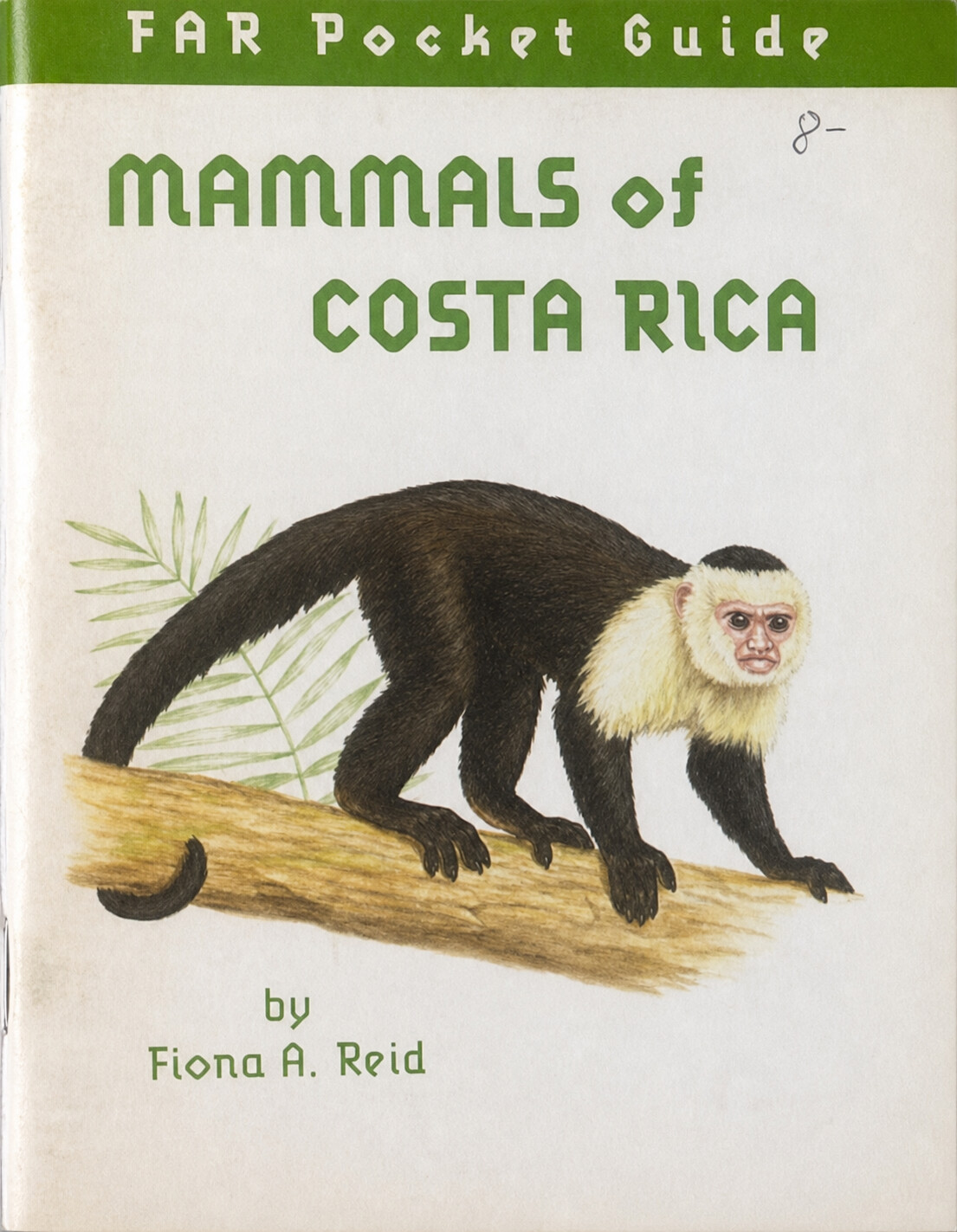
A comprehensive natural history and field guide to all bat species recorded in Trinidad and Tobago. It includes an introduction to bat biology, i.e. bat physiology and ecological habitats, species distribution, population status, dietary ecology, species reproduction biology, and echolocation behaviour. Insights into Amerindian bat mythologies, local folklore and the exuberance of the Carnival Bat are also explored. Practical guidance is given on humane eviction and exclusion of bats from dwellings and public buildings. By Geoffrey A. Gomes, a Trinidad-born naturalist and Fiona A. Reid., well known author and illustrator of numerous works including Peterson Field Guide to Mammals of North America. 2015, sb, 286pp.
"This book provides thorough, jargon-free coverage of bat natural history with special emphasis on the essential ecosystem roles of bats. Readers will learn the benefits of conserving and living harmoniously with bats, overcome needless fear, find solutions to occasional nuisance problems and be endlessly fascinated by bat sophistications and contributions to human wellbeing. The entire book is lavishly and extraordinarily well illustrated. It is the only source for life-size illustrations of all 70 species of bats known from the islands of Trinidad and Tobago." - Merlin Tuttle
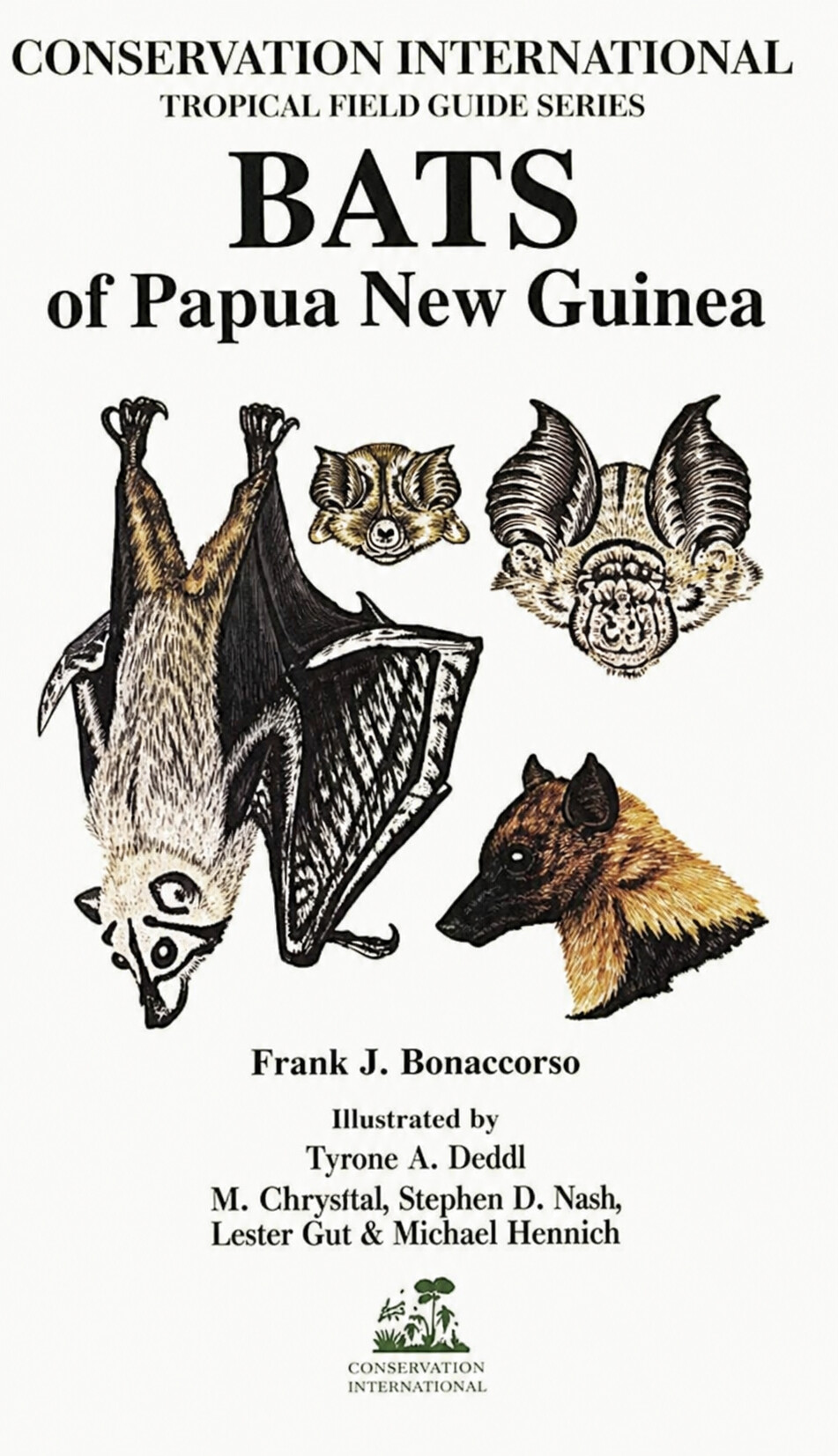
A comprehensive guide full of detailed information in a compact format. Many illustrations by Feona Reid. Illus. 489pp, pb, 1998, by Frank J. Bonaccorso.
"Knowing them, Identifying them, Protecting them." An excellent general book on bats. Well illus. including face, ear and tail details. By Schober & Grimmberger, 239pp, 1997, hb.
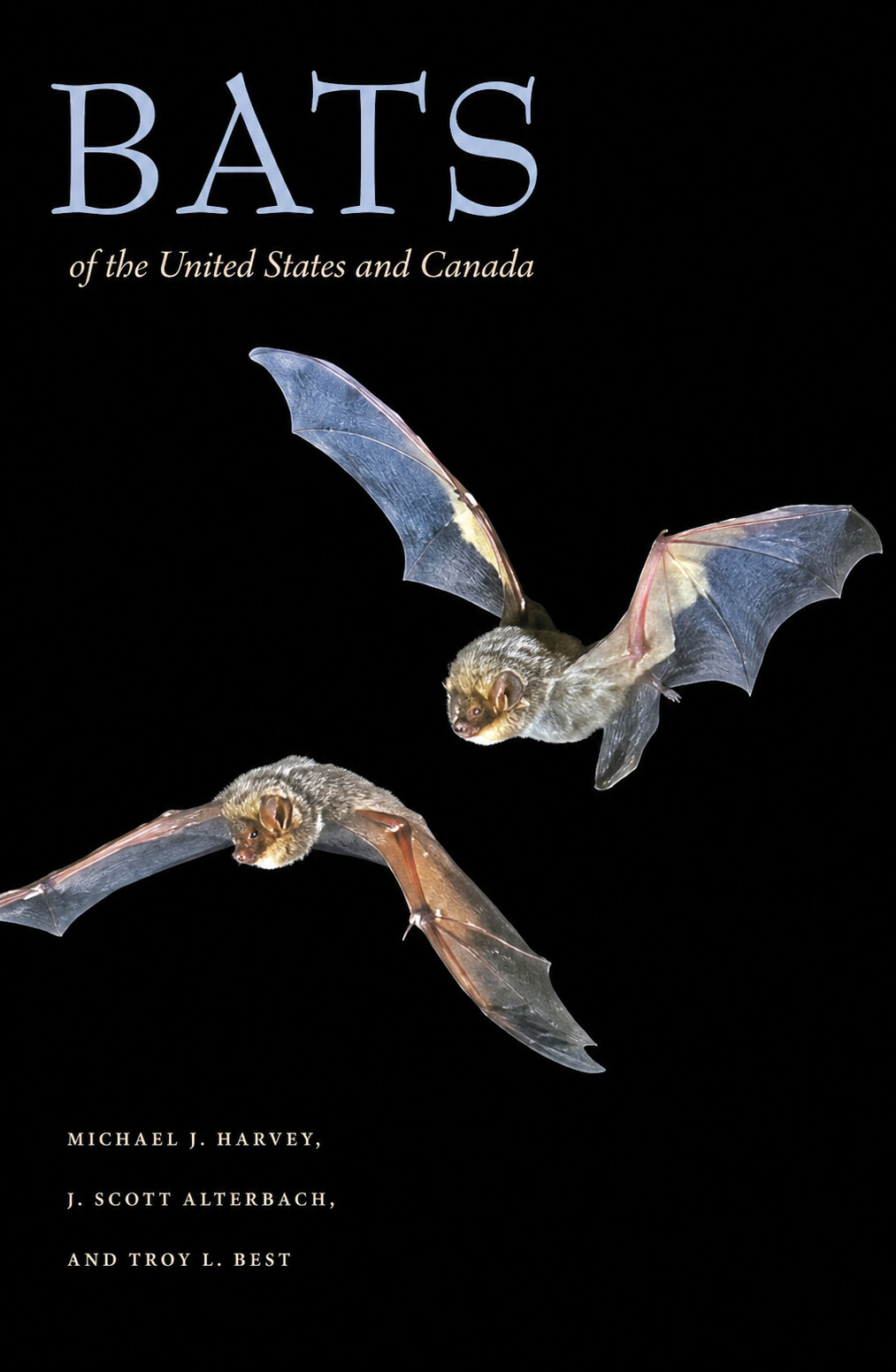
A comprehensive, current fact-filled and easy to use book full of stunning photographs. Discusses threats to bat populations, efforts to save them and the latest research on how the nocturnal creatures live, breed and feed. 204 pp., sb. 2011. By Harvey, Altenbach and Best.
The Pederson Field Guide, by Fiona Reid. Fourth Edition. With every species of North American bats. The most comprehensive, in-depth, and current guide to North American mammals, this book covers all the mammals found in North America north of Mexico, including those that live in near-shore waters. The only guide to include paintings and photographs of the animals as well as photographs of mammal skulls, it has 80 color plates, plus 46 additional color illustrations and black-and-white drawings, nearly 400 range maps, and more than 100 color photographs. 608 pages.
Over 100 pages on bats with 11 bat plates. The first comprehensive field guide to the mammals of this region. Illustrations directly from field work done by the author. 48 full color plates. Detailed species accounts. Extensive references. Range maps and abundant species information. By Fiona Reid, 344pp, 1997, Second Edition 2009.
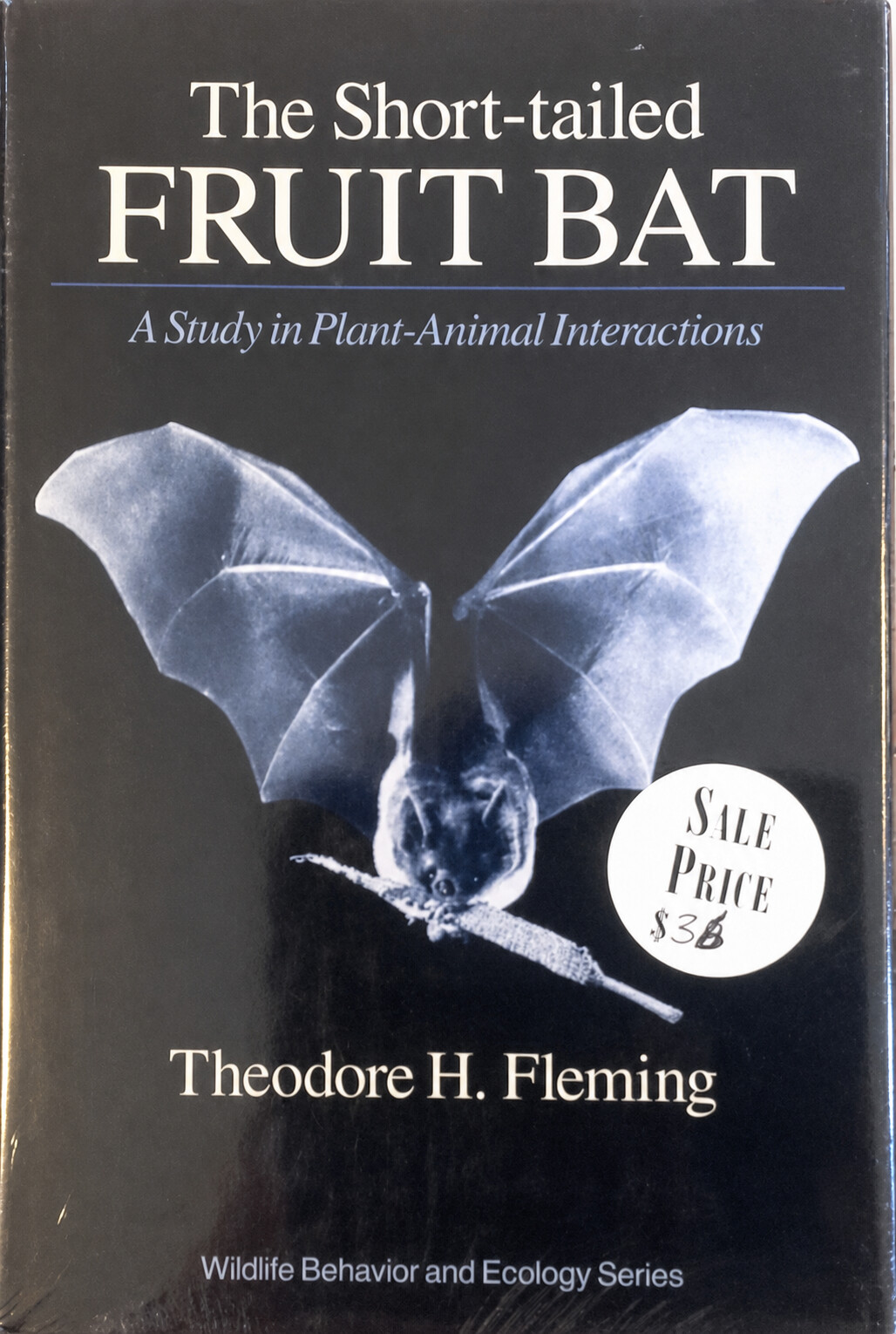
A study in Plant-Animal interactions By Theodre H. Fleming. 1988, 380 pp., hb. As dusk settles over the Costa Rican forest, the short-tailed fruit bat, Carollia perspicillata, stirs from its cave roost. Flying out to search for ripe fruit, Carollia returns to a night roost in the forest vegetation to eat. After a few such flights Carollia rests, and the fruits pass through its short digestive tract. The seeds are excreted onto the ground, to be eaten in turn by mice and insects, but a few are pushed into crevices where they await the necessary conditions for germination. In The Short-tailed Fruit Bat, Theodore Fleming examines Carollia's role in the ecology of tropical forests. Based on more than ten years' research, this study provides the most detailed ecological and evolutionary account to date of the life history of a Neotropical mammal and includes striking photographs of the bats in flight.
Shop Regional Bat Identification Guides
Select a guide that covers the geographic area, species and identification methods relevant to your fieldwork or travel.